
Project
EFFORT Project: Enhancing livelihood and Fostering Resilience among the vulnerable communities along Trishuli River basin
Description
About this project
The EFFORT Project is implemented by Action Nepal in partnership with Dan Church Aid (DCA Nepal) to strengthen resilient livelihoods and disaster preparedness in Benighat Rorang Rural Municipality, Siddhalek Rural Municipality, and Nilkantha Municipality of Dhading District.
The project works in communities that are highly dependent on agriculture and river-based livelihoods, where around 88% of land is steep and vulnerable to climate-induced risks such as landslides, riverbank erosion, and low agricultural productivity. These challenges are further intensified for marginalized groups, including Chepang, Newar, Indigenous, and Dalit communities, due to limited land ownership, low literacy, and unsustainable farming practices.
The project focuses on promoting sustainable agriculture, climate-resilient technologies, improved market linkages, and comprehensive disaster risk management. Through these interventions, the EFFORT Project aims to strengthen community resilience, enhance productivity, and support long-term livelihood security.
Objectives
Enhance economic empowerment of women and youth through sustainable agriculture and enterprise development.
Strengthen the capacity of local governments, community-based organizations, and the private sector to manage and mitigate climate-induced risks.
Target Groups
Youth, women, smallholder farmers, marginalized and indigenous communities (Chepang, Newar, Janajati, Dalit), local government officials, and community-based organizations.
Project Timeline
Duration and implementation flow
Objectives
1) To enhance the economic empowerment of women and youth
through the promotion of sustainable agriculture and enterprises
2) To enhance the capacity of local government, CBOs and private
sectors in managing and mitigating the climate-induced risk in the
Trisuli River Basin area.
Activities
Climate-Resilient Agriculture and Infrastructure
• 23 farmers from Mothers’ Groups benefited from greenhouse and drip irrigation systems.
• 3 mushroom polyhouses established to support commercial farming for 3 farmer groups.
• 30 soil tanks constructed across 7 groups to improve water storage and irrigation.
• 110 farmers supported through group-based initiatives, including goat shelters for 39 farmers, distribution of 42 she-goats, and one breeding he-goat benefiting (in a group with) 29 households.
Capacity Building and Training
• 100 farmers trained in climate-resilient and agroecological practices from 8 farmer groups.
• Farmer Field Schools (FFS) established in 3 Mothers’ Groups, with 27 out of 51 planned sessions completed, engaging 237 rights holders in theory and hands-on demonstrations.
• Conducted 3 soil testing trainings/orientations for farmer groups in Gauthale, Bhedabari and Chailing.
• Orientation on Fall Armyworm pest management provided to 21 farmers in Bedabari Community, Siddhalek.
• Provided sauce-making training to 30 members from Mothers’ Farmer Group in Gauthale Community, Siddhalek, promoting value addition and income diversification.
Agriculture Tools and Technology Support
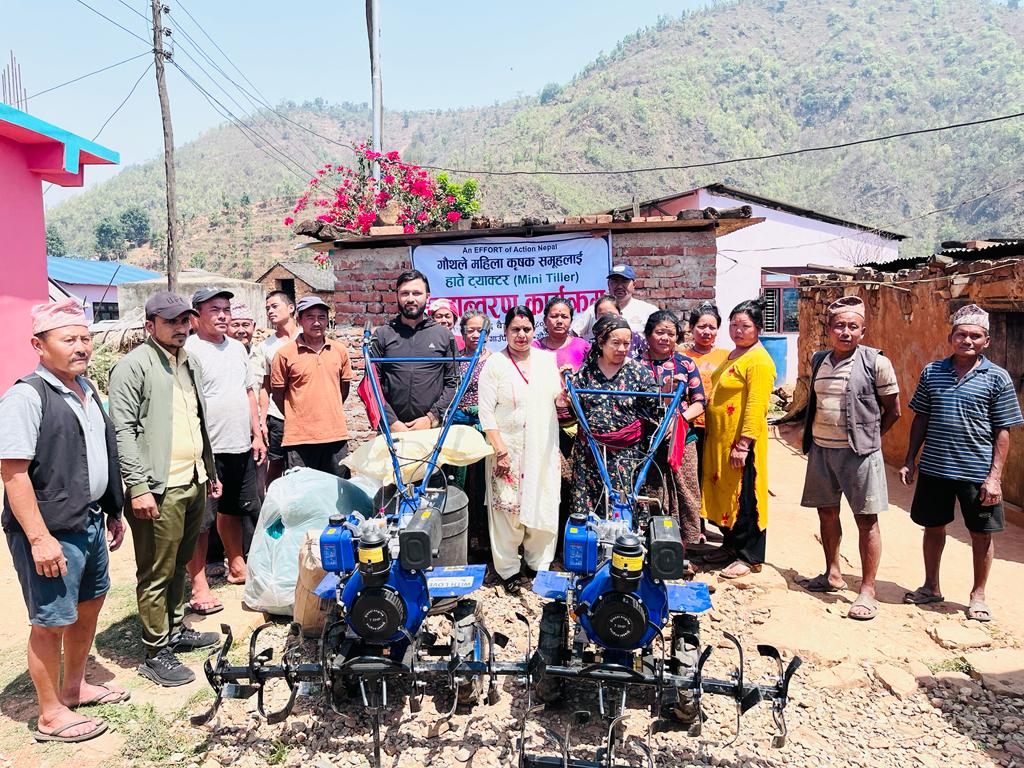
• Distributed agricultural tools to 5 Mothers’ Groups, including: Corn Shellers (3), Hajaris (11), Knapsack Sprayers (7), Secateurs (5), Soil Drilling Machines (2), Jab Planters (4)
• Pruning secateurs and plant cutters provided to 3 farmer groups (2 for each group) Organic and Sustainable Farming Initiatives
• Bhakaro Sudhar Program supported 10 households from 5 groups in producing organic farming inputs.
• Jholmol Program benefited 75 households from 3 groups, promoting bio-fertilizers and eco-friendly practices.
Livelihood Diversification
• 14 Chepang households supported with honeybee enterprise development.
Disaster Risk Reduction (DRR) and Governance
• 10 DRR awareness and sensitization programs conducted with active youth participation.
• Over 870 participants, including students, teachers, youth, and women farmers, directly benefited from DRR events.
• Installed the BIPAD portal in Siddhalek RM, strengthening local disaster information management.
• Anticipatory actions included building a drainage system to safely divert floodwater, preventing damage and landslide risks, and protecting 3 households and the wider community.
• Constructed a Multi-Use System (MUS) for drinking water and irrigation in Chailing Community, with matching funds from Benighat Rorang RM and community benefit 29 Hhs
• Held 2 municipal-level meetings with 29 government officials and more than 75 community-level meetings with groups. Studies and Market Linkages
• Two expert studies conducted on livelihood status, opportunities, and project outcomes in Siddhalek and Benighat Rorang RMs.
• Organized B2B linkages meetings with farmers, local authorities, and business stakeholders to strengthen market connections.
Gallery
Project photos
SDGs Impacted
Sustainable Development Goals connected to this work
 SDG 1: No Poverty
 SDG 2: Zero Hunger
 SDG 5: Gender Equality
 SDG 8: Decent Work and Economic Growth
 SDG 11: Sustainable Cities and Communities
 SDG 12: Responsible Consumption and Production
Related Projects
More work in this area
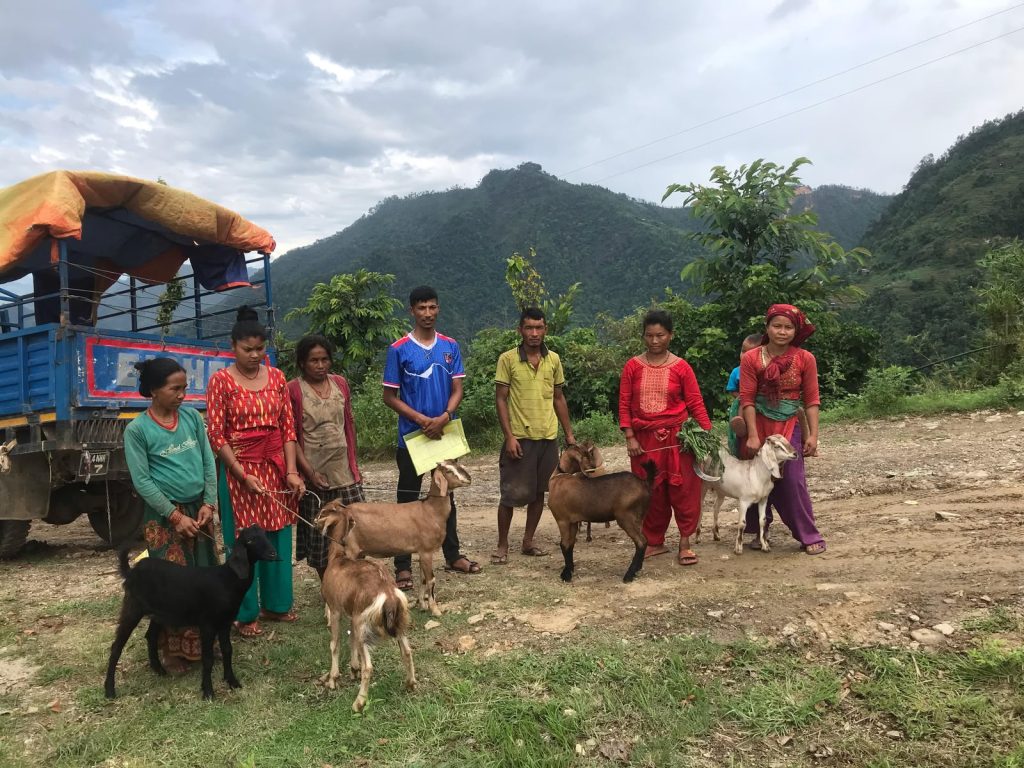
Goat Gift Project
View Project
Innovation in Vegetable Value Chains (IALVC Project)
View Project